Industry Day Speakers
Industry Day
Learn from Leading Practitioners
On Wednesday 25/03/2026, REFSQ 2026 participants will have an exceptional opportunity to listen to presentations from distinguished practitioners sharing their real-world knowledge and experience in requirements engineering.
Don't Miss Out!
Register now for REFSQ 2026 Industry Day and learn from leading practitioners.
🎫 Register Now
Anna Czaplicka & Dariusz Walczak
 BitByBit Sp. z o.o.
Bridging Requirements and Validation: Automated Scenario Validation in Monitoring and Control Software for Space Systems
The success of space missions depends on the flawless operation of complex ground and flight control systems, where thorough validation is essential. This presentation explores how UI-level Selenium tests developed within an extensive scenario-driven framework can serve as a critical link between requirements engineering and validation activities.
Drawing from practical experience collaborating with ESA (European Space Agency), we will examine how automated test scenarios were developed to validate operational requirements. The talk will cover scenario modeling, test structuring, and systematic traceability methods that enable these automated tests to accurately reflect user intent, express business rules, and provide continuous feedback on requirement completeness and system behavior.
The presentation will discuss the bidirectional relationship between requirements and automated tests, including methods for mapping scenarios to test suites. We will also explore the organizational impact of treating automated tests as a shared, evolving source of truth.
Anna Czaplicka is the leader of the Automated Software Testing Team at BitByBit, specializing in spacecraft monitoring and control systems such as EGS-CC, MCS-CC, and Pulse.
Dariusz Walczak is the founder and managing director of BitByBit, where he leads the space division and coordinates all space-related projects within the company. With over 20 years of experience in IT and nearly a decade in space domains, Dariusz has established himself as a distinguished leader in the industry.
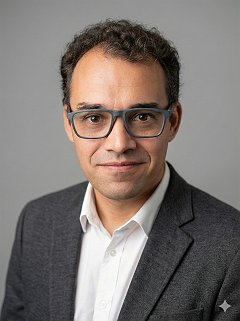
Piotr Hołubowicz
 Google
Building Products Users Trust: A Practical Guide to Reliability
How do you ensure a product used by millions remains reliable and performant? At Google, Site Reliability Engineering (SRE) principles provide a framework for building and operating services at scale. This talk will offer a peek behind the scenes, using Google Photos as an example, to illustrate how we approach and measure the quality of service. We'll explore the journey from traditional server-centric monitoring to methods that better reflect the actual user experience. Discover practical strategies and lessons learned at Google for engineering more robust and dependable products, and gain insights into evolving your own practices to better understand system health and user satisfaction.
Piotr is a Site Reliability Engineer at Google. He has been a member of the Health and Photos SRE teams, focusing on observability, incident response and capacity management. He is a Poznań University of Technology graduate. Outside of work, Piotr loves to run - especially off the path with a compass and a map in his hands.
Connect on LinkedIn
Jacek Kobusiński, PhD
 Nexus Sp. z o.o.
The Art of the Impossible: Managing Requirements in a World of Unreal Deadlines and Indecisive Users
Although hospital-based patient care appears to be a highly regulated and demanding domain, the development of Hospital Information System (HIS) software is far from straightforward. Using real-life examples, this talk highlights the challenges that an average software producer encounters in this market. While no universal solution exists, the presentation will describe how, in practice, these challenges can be approached—sometimes more effectively, sometimes less—based on day-to-day experience.
With more than 25 years of experience in developing Hospital Information Systems, Jacek Kobusiński has built a career deeply rooted in healthcare technology. Over the course of his professional path, he has held a wide range of roles, including programmer, development team lead, director of customer support, and ultimately Vice President responsible for product development and administration at Nexus Polska, one of Poland's leading HIS providers. Along the way he completed a PhD in the area of distributed systems. He also devoted many years to academia, sharing his expertise as a researcher and lecturer at the Poznań University of Technology and the Poznań University of Medical Sciences.
Connect on LinkedIn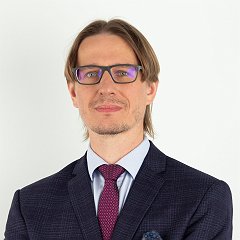
Filip Kolendo
 Primesoft Polska, Yanosik, MrReceipt
Ten Common Pitfalls in Requirements Engineering: Lessons Learned from B2B and B2C Projects
The presentation offers a deliberately subjective perspective on requirements engineering, grounded in the author's personal experience gained from delivering and leading large-scale software projects in both B2B and B2C environments. The observations presented do not originate from statistical research or adherence to a single methodology, but from recurring patterns repeatedly encountered in real commercial projects—both successful and unsuccessful.
The talk identifies ten of the most common mistakes (or, alternatively, ten good practices) that emerge during the elicitation, interpretation, and validation of requirements. These include excessive trust in client declarations, the limitations of formal notation as a communication tool, the responsibility of the supplier for the final outcome, managing expectations in professional service engagements, and aligning team competence with project complexity.
The goal of this presentation is not to introduce a new framework or universal solutions, but to encourage critical reflection on one's own assumptions, decision-making processes, and approach to quality at the earliest stages of a software project.
Filip Kolendo is an entrepreneur and co-founder of multiple technology ventures, including Primesoft Polska, a market leader in Poland in the area of DMS and BPM systems. He also co-created Yanosik, a widely used driver assistance system providing real-time information on road hazards, accidents, speed cameras, and police controls, serving a community of over 1.5 million drivers per month.
Other projects he has co-founded include AutoPlac, an online automotive marketplace; Radio Yanosik, a digital radio platform currently offering over a dozen stations; PanParagon (MrReceipt), a popular consumer application for digital receipt storage, promotion discovery, and shopping list management; and NotiNote, an advanced solution for locating people and physical assets.
Filip Kolendo holds a degree in Computer Science from the Poznań University of Technology. His professional background spans large-scale B2B and B2C software projects, with a strong focus on requirements engineering, product delivery, and professional services.
Connect on LinkedIn
Rafał Mroziewski & Dominik Nitychoruk
 MONDI Sp. z o.o.
Why the AI That Hires Programmers Fails to Hire Welders? Building a Data-Driven Blue-Collar Recruitment Process
AI-driven recruitment systems have become widely adopted in white-collar labor markets. However, transferring these approaches, even with retraining, to blue-collar recruitment often results in systematic failure. Models trained on structured CVs and standardized career paths perform poorly in contexts where job titles are ambiguous, skills are tacit, and candidate assessment relies heavily on experiential judgment. The consequences include weak matching quality, increased turnover, and decision making driven by intuition rather than evidence.
This paper presents a requirements-driven design approach used in the development of the MONEKTO system, an AI-augmented recruitment platform for blue-collar labor markets. The core challenge was transforming informal, experience-based expectations of recruiters and managers into verifiable, operational system requirements suitable for machine learning and decision support. Rather than eliciting requirements in isolation, we adopted a participatory requirements engineering process involving executive leadership, recruiters, coordinators, and operational staff from the outset. This approach enabled early alignment on core assumptions, significantly reduced resistance during deployment, and eliminated the need for separate change management initiatives.
The talk will cover four key aspects:
- Requirements Identification: Techniques for eliciting and validating shared assumptions across heterogeneous stakeholder groups.
- Knowledge Extraction: Methods for formalizing recruiter expertise into conditional rules and predictive machine learning models.
- Multi-Source Data Integration: Requirements and architectural decisions enabling the integration of declarative data, recruitment process events, and post-hire employment durability outcomes.
- Legal and Organizational Constraints: Treating GDPR and the EU AI Act as first-class design requirements rather than external compliance constraints.
We argue that in AI-based recruitment systems, the most critical requirement is a deep understanding of the human decision process and the surrounding business workflow. By grounding AI design in requirements engineering and domain knowledge, we actively define a transition path for blue-collar recruitment from subjective assessment toward accountable, data-driven decision making.
Rafał Mroziewski, PhD, MBA is an expert in personnel strategies, the cross-border labor market, and the applications of artificial intelligence in HR. For over 20 years, he has bridged the gap between academia and business practice, designing scalable HR structures and processes for enterprises across Europe, particularly on the Poland–Germany axis.
He holds a PhD in Economics; in his research, he analyzed the implementation of Management by Values (MBV) and the impact of organizational culture on team stability and efficiency. He is the founder and head of an international consulting and recruitment group.
Dr. Mroziewski is the visionary and creator of MONEKTO—an AI-driven platform for workforce planning, skill matching, onboarding, and turnover prevention—and the MONDI Mobile app, which streamlines the recruitment and integration process for international workers. He is a frequent speaker at industry and academic conferences and has published extensively on AI in HR, people analytics, and organizational resilience in the face of labor shortages.
Dominik Nitychoruk is an AI Project Manager at MONDI, specializing in the design and implementation of AI-augmented HR systems in operational, high-variability environments. His work focuses on translating complex business processes and human decision making into formal requirements for machine learning systems and decision support tools.
He leads the development of the MONEKTO platform, combining predictive machine learning models, expert rule systems, and employment durability analytics to support data-driven blue-collar recruitment. His responsibilities include requirements elicitation, system architecture, model integration, and alignment with legal and organizational constraints such as GDPR and the EU AI Act.
Dominik is also responsible for the development of the MONDI Mobile application, which supports recruitment, onboarding, and ongoing employment processes for workers entering the German labor market. He applies Lean and process engineering principles to reduce reliance on intuition in HR processes, with an emphasis on transparency, user acceptance, and long-term organizational outcomes.

Anna Maria Rogulska
 Grodan Rockwool Group
Modernising Under Legacy Constraints: Requirements Lessons from Evolving GroSens Suite
This practitioner talk focuses on backwards compatibility as a first-class requirements concern in the evolution of Grodan's GroSens Suite – a solution comprising edge devices, cloud processing, and a web application focused on data analysis in the world of precision horticulture.
The business objective was to move beyond monitoring and provide irrigation advice based on Grodan's expert knowledge and sensor readings. Technically, this implied transitioning from scheduled batch computations to a more streaming-oriented processing model. However, a substantial installed base of legacy devices could not be upgraded easily in the field. At the same time, these devices were essential to customers' daily operations.
The talk's case study describes how this constraint reshaped our requirements while considering the cost of transition – all without creating a two-tier product experience. We conclude with compatibility-focused lessons when evolving requirements in long-lived hardware–software–cloud ecosystems.
A Product Owner with extensive experience in building and delivering valuable digital solutions, with a strong focus on web applications, cloud-based systems, and IoT integrations. She has worked both in small, agile teams and in large, international organizations. She combines a technical background in software engineering with a psychological perspective on processes and people.
In her day-to-day work, she focuses on software quality, precise prioritization, and planning based on clearly defined goals, understanding that well-crafted requirements and a shared understanding of the problem form the foundation of successful products. She believes in open communication, challenging taboos, and the power of experimentation as a source of learning in a rapidly changing environment. She often supports teams and stakeholders in understanding why frequent value delivery and an iterative approach to requirements lead to better technical and business outcomes.
Currently, she focuses on digital solutions for modern, large-scale hydroponic farming, where working with operational data and system requirements is critical to solution quality and reliability.

Łukasz Mozalewski, Krzysztof Ropiak
 Legimi S.A.
Between Fixed Requirements and Changing Reality: Lessons from a Publicly Funded Project
From the perspective of a publicly funded project, a stable set of rules is a must: a precisely defined goal, schedule, budget, scope, and formal requirements that must be consistently met from launch to final settlement. This is the logic of the plan and its implementation, which facilitates monitoring and control.
In day-to-day implementation, something else matters: responding to changes— in the business environment, in user needs, in team organization, and in stakeholder expectations. This is the logic of adaptation and iteration.
This presentation will show how Legimi S.A. navigated between these two logics, the necessary choices, and how they led to the implementation of a new book recommendation service — from both a business and a research perspective.
Łukasz Mozalewski works at Legimi S.A. as a Project Manager. He leads both publicly funded projects and projects without such funding. Throughout his career, he has also held roles such as Product Owner, Business Analyst, Data Analyst, System Owner, and Developer. He graduated from the Poznań University of Economics and Business and has further expanded his knowledge and skills through various postgraduate programs. In his free time, he enjoys reading books, photography, and spending time with his family.
Krzysztof Ropiak has been a researcher at the University of Warmia and Mazury in Olsztyn for over 10 years, although his experience in the IT industry spans more than 20 years. In his research work, he primarily focuses on granular computing, as well as combining these techniques with artificial intelligence solutions. For several years, he has been collaborating with Legimi S.A. on implementing new services based on machine learning methods. In his free time, he enjoys sailing, cycling, and trying to outplay his colleagues from the department in board games using intelligence - not necessarily artificial.
The full list of speakers will be announced soon!
Ready to Join Us?
Be part of REFSQ 2026 and gain invaluable insights from these exceptional industry speakers.
🎫 Register Now